1
Right of Way & Turn Rules
Inside New York City, when may you turn right on a red light?
Tap to reveal answer
Inside New York City, when may you turn right on a red light?
Tap to reveal answer
In New York City (all five boroughs), turning right on a red light is prohibited by default — the opposite of the rest of New York State and most of the US. You may only turn right on red where a sign expressly permits it. Violations in NYC carry heavy fines and points on your license.
2
Bicycles, Motorcycles & Pedestrians
In New York State, who must wear a DOT-approved helmet when operating or riding a motorcycle?
Tap to reveal answer
In New York State, who must wear a DOT-approved helmet when operating or riding a motorcycle?
Tap to reveal answer
New York's motorcycle helmet law (VTL §381) requires all operators and passengers on motorcycles to wear a DOT-approved helmet on any public road. NY was the first state to enact a universal motorcycle helmet law (1967). Violations carry fines and possible license points.
3
Speed Limits & Stopping Distance
On dry pavement at 55 mph in New York, the total stopping distance (reaction + braking) for an average passenger car is approximately:
Tap to reveal answer
On dry pavement at 55 mph in New York, the total stopping distance (reaction + braking) for an average passenger car is approximately:
Tap to reveal answer
At 55 mph on dry pavement, a car needs approximately 300 feet to fully stop from the moment the driver notices a hazard — roughly 55 feet of reaction distance plus 245 feet of braking. On wet pavement, stopping distance roughly doubles. This is approximately the length of a football field.
4
Parking, Stopping & Standing
When parallel parked on a New York street, your vehicle's wheels must be no more than what distance from the curb?
Tap to reveal answer
When parallel parked on a New York street, your vehicle's wheels must be no more than what distance from the curb?
Tap to reveal answer
New York requires parallel-parked vehicles to be within 12 inches of the curb. Parking farther than that creates a hazard for passing vehicles and can earn a parking ticket. The 12-inch rule is standard in most US states and a common road-test grading point.
5
Signs & Signals
What does a NO PASSING ZONE pennant sign indicate?
Tap to reveal answer
What does a NO PASSING ZONE pennant sign indicate?
Tap to reveal answer
A no passing zone sign warns that drivers must not pass in that area.
6
Signs & Signals
What does a lane-use control sign indicate?
Tap to reveal answer
What does a lane-use control sign indicate?
Tap to reveal answer
Lane-use control signs show which movements are allowed from a particular lane.
7
Signs & Signals
What does a flashing red traffic signal mean?
Tap to reveal answer
What does a flashing red traffic signal mean?
Tap to reveal answer
A flashing red signal is treated like a stop sign.
8
Signs & Signals
What does a flashing yellow signal mean?
Tap to reveal answer
What does a flashing yellow signal mean?
Tap to reveal answer
A flashing yellow signal warns you to proceed carefully.
9
Signs & Signals
What does this sign indicate?
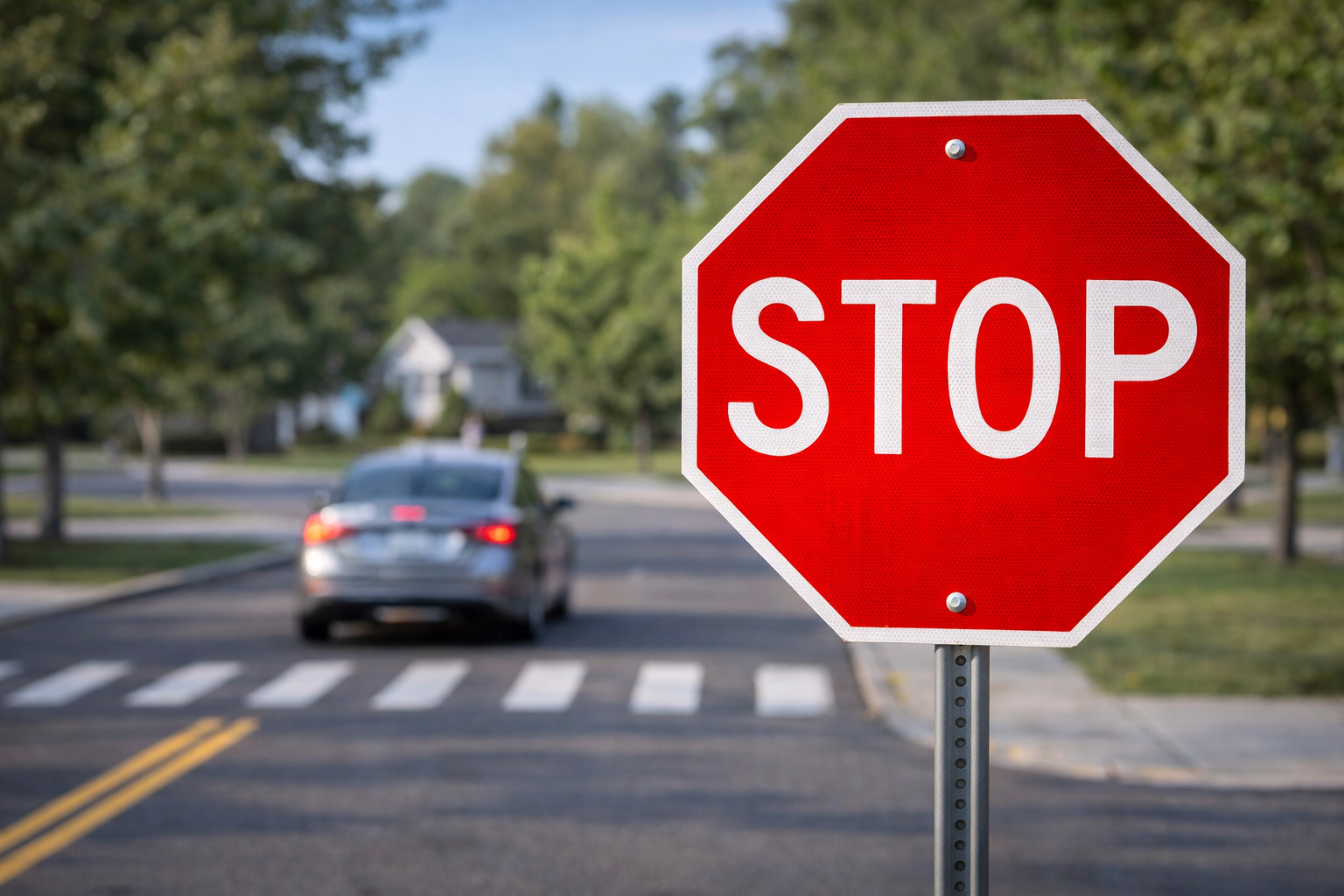
Tap to reveal answer
What does this sign indicate?
Tap to reveal answer
A stop sign means you must come to a complete stop and proceed only when it is safe.
10
Signs & Signals
What does this sign indicate?
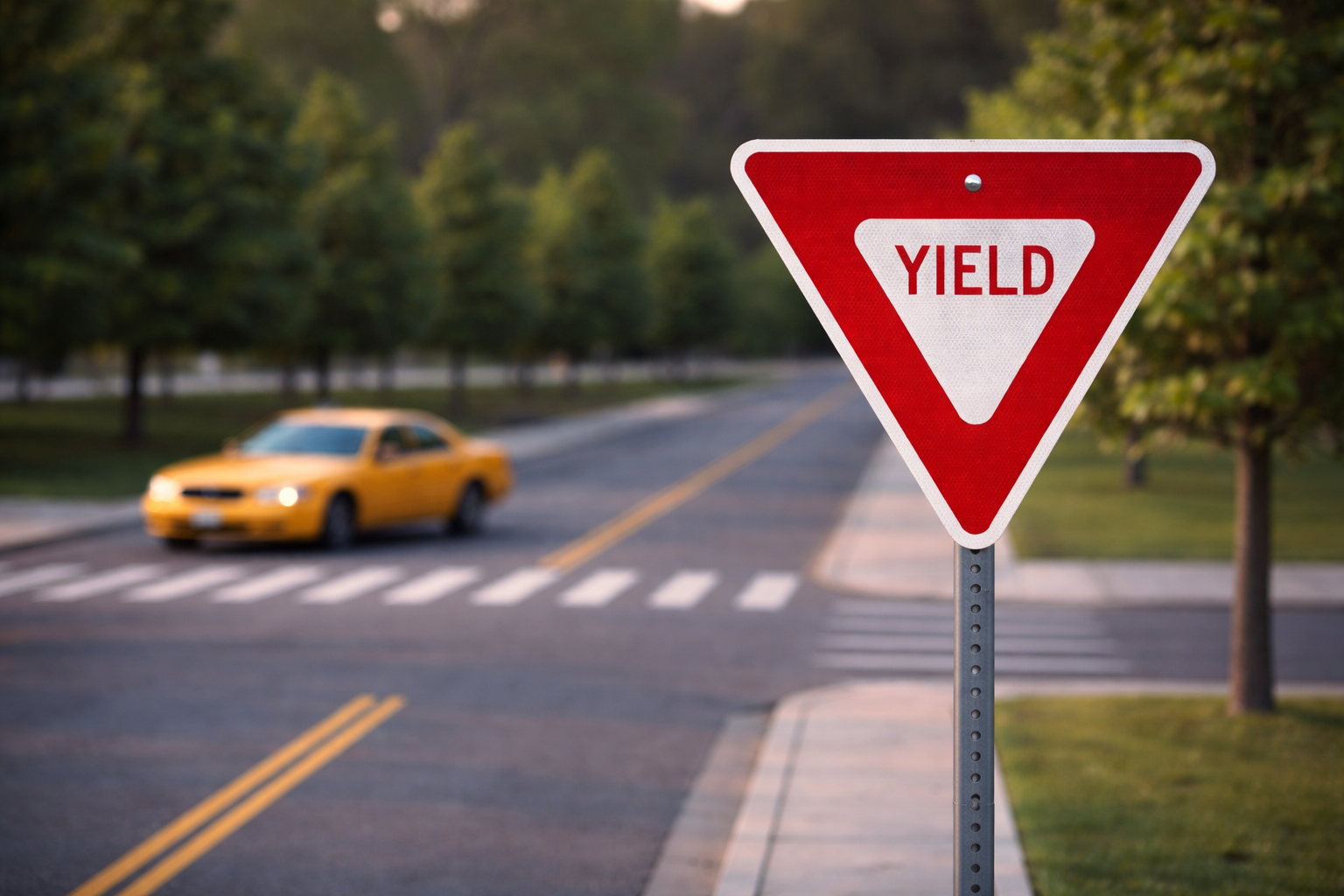
Tap to reveal answer
What does this sign indicate?
Tap to reveal answer
A yield sign means slow down, give the right-of-way when required, and stop if necessary.
Get the full New York practice in our app
Hundreds of New York questions, timed mock exams matching the real DMV test, progress tracking, and offline mode — all free.
Back to New York overview
Test facts, passing score, specialty laws
Browse all New York questions
10 indexed question pages with explanations